
Pakistan & Afghanistan
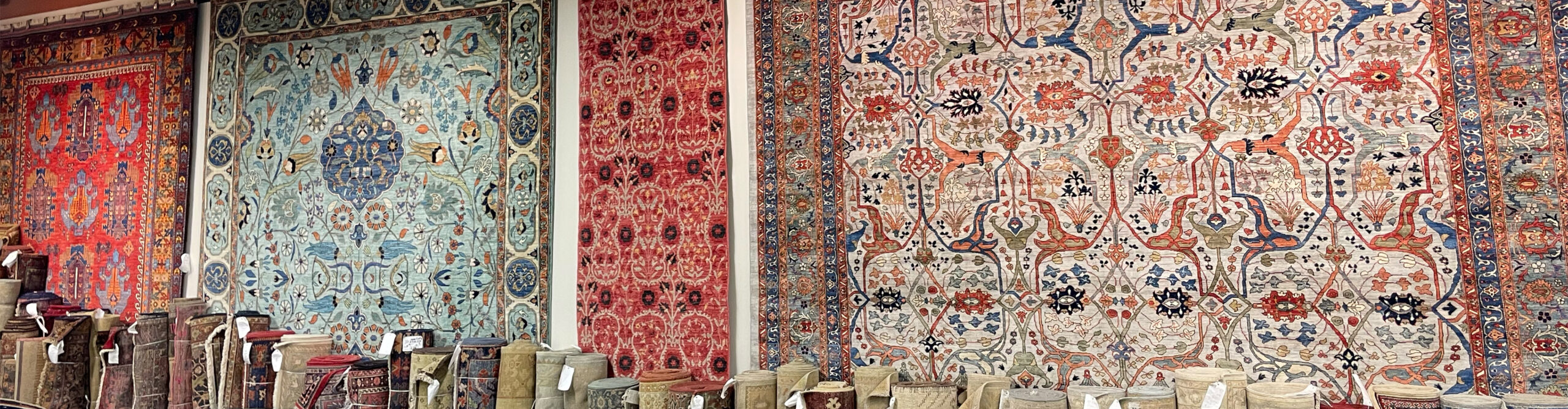
Persian Rugs From Pakistan & Afghanistan
Rugs from the Pakistan-Afghanistan region are celebrated for their rugged durability, intricate designs, and deep cultural resonance. Handwoven by skilled artisans, often from Pashtun or Baloch communities, these rugs typically use high-quality wool from local sheep, known for its strength and rich texture. The weaving techniques, such as the Persian or Turkman knot, allow for detailed patterns, including geometric shapes, tribal motifs, and stylized floral designs inspired by Central Asian traditions. Colors are bold and earthy—deep reds, blues, browns, and ivories—often derived from natural dyes, reflecting the region’s nomadic heritage.
Afghan war rugs, a notable subset, emerged during the Soviet-Afghan conflict, uniquely incorporating modern imagery like tanks and rifles alongside traditional elements, blending art with historical commentary. Pakistani Bokhara and Baluchi rugs, meanwhile, feature repetitive medallions or tree-of-life patterns, showcasing precision and symmetry. These rugs are typically medium-piled, balancing softness with resilience, suited to the harsh climates of the region. Historically utilitarian, they’ve evolved into prized decorative pieces, valued for their authenticity and craftsmanship. The cross-border influence of trade and migration has fused styles, making these rugs a vibrant testament to the region’s turbulent yet creative spirit.
Aryana, Faryab, and Nooristan rug styles originate from distinct regions and traditions in Afghanistan, reflecting the country’s diverse weaving heritage. Each style embodies Afghanistan’s rich history of migration, trade, and resilience.
Distinguishable By Region
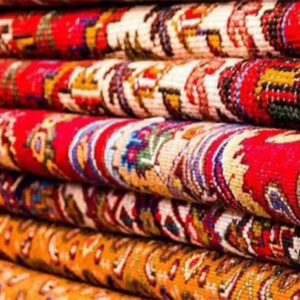
Aryana rugs trace their roots to northern Afghanistan, woven by nomadic Turkmen and Mogul tribes. The name “Aryana” refers to an ancient Central Asian region encompassing parts of modern-day Afghanistan, Persia, and beyond. These rugs emerged from the traditions of Turkmen weavers, who migrated across the region, blending tribal influences with their craft. Their use of hand-spun wool, natural dyes (like indigo and madder root), and medium-fine Persian knots (around 90-100 knots per square inch) reflects a nomadic lifestyle and cultural exchange along ancient trade routes.
Faryab rugs originate from Faryab Province in northern Afghanistan, near the Turkmenistan border. Named after this relatively peaceful area, they are crafted by Turkoman Aryana weavers who settled there to escape conflict in Turkmenistan. These rugs, also using Persian knots (about 150 knots per square inch), feature bold tribal and decorative designs, showcasing the Turkmen Ersari tradition adapted to a new homeland, with hand-spun wool and vibrant natural dyes.
Nooristan rugs come from the remote Nooristan Province in eastern Afghanistan, known as the “land of illumination.” Woven by Turkmen artisans, possibly descendants of Alexander the Great’s armies, these rugs are among the finest, with 250+ knots per square inch using Persian knots. Their intricate Persian-inspired patterns and natural-dyed, hand-spun wool reflect a sophisticated evolution of tribal weaving in an isolated region.